Repairs · Mississauga
Garage Door Safety Inspection
It has been a hard winter. The bottom seal froze to the slab twice, the opener groaned each morning, and one afternoon you noticed a cable on the left side hanging with a little slack in it.
Garage Door Safety Inspection
In plain words
What you get back is a report with four kinds of entry. Items that are in good order, so you know what is fine. Maintenance items, such as lubrication or a loose hinge bolt, which are often handled during the same visit if you wish. Repairs to plan, such as a worn roller set or a cable showing rust at the bottom loop, quoted separately. And, rarely, a stop-use item, where the door should stay put until a specific part is corrected. That last category is the reason the inspection exists, and the report says plainly which items fall into it.
How the visit goesA tenant mentioned the door is louder than it used to be. From the driveway it looks fine, but on closer inspection the hinges near the floor are streaked orange and one roller wobbles as it turns.
Mississauga
How the visit goes
Springs, cables and drums, looked at and left alone
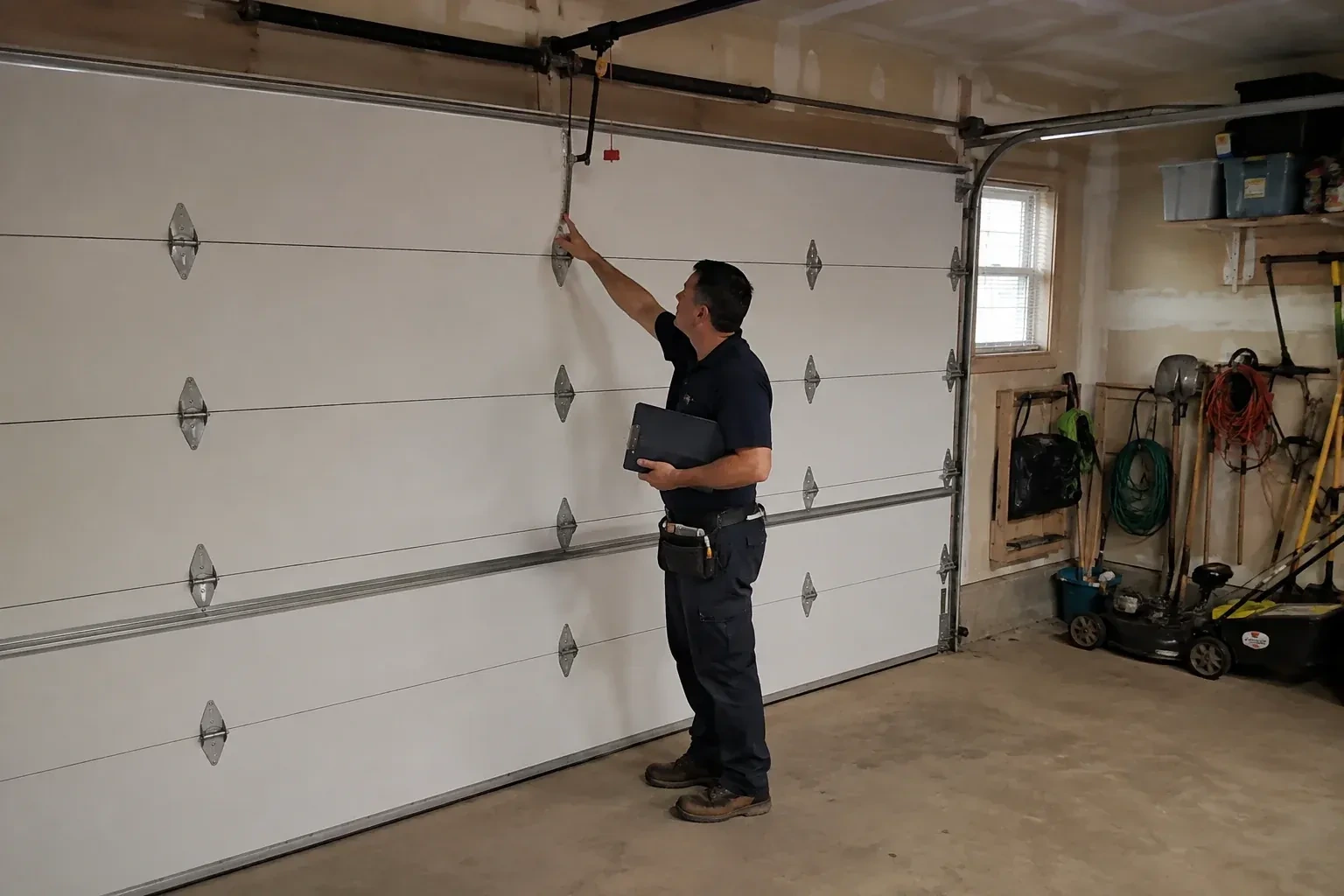
The counterbalance gets a careful look and nothing more during the inspection. On a torsion door the technician checks the spring coil for a gap, rust or a stretched section, confirms the cone set screws and centre bearing look sound, and follows each cable from the drum to the bottom bracket looking for broken wires, a rust bloom near the loop or a slack side. The drum wrap is checked for a single neat layer. On an extension door the springs, pulleys and containment cables are examined the same way. Any adjustment to these parts is a separate, planned job matched to that system, torsion tension controlled with winding bars rather than simply released; the inspection records their condition.
Fasteners, tracks and hinges with tools in hand
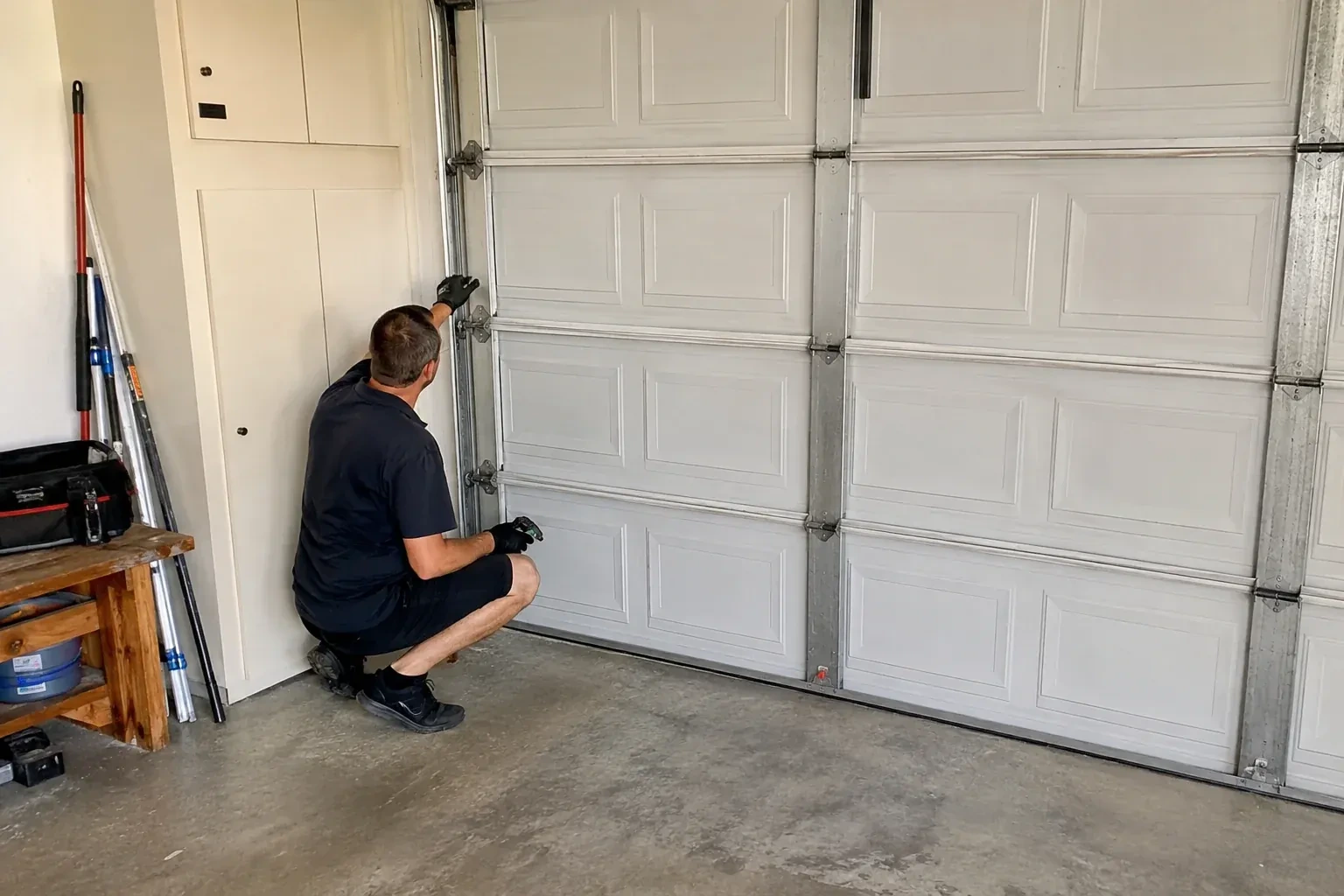
Once the door has been tested, the technician goes back along it with a socket set and a level. Every hinge bolt and track bracket is checked for tightness, and any that has backed out is snugged; the bottom roller brackets are left to the trained, system-specific handling their lift-cable tension calls for, not a routine snug. The vertical tracks are checked for plumb and the horizontals for level, with the door-to-track gap measured and any pinch or flare recorded. Hinges are numbered from the bottom up and a hinge in the wrong position, often left from an earlier repair, is noted. A stripped fastener or a bent bracket becomes a repair item rather than a tightening.
Keeping the opening clear and the controls sensible
A few placement decisions carry on after the visit. Bins, bikes and the snow shovel live away from the opening so the door never comes down on them and the cables never go slack. The wall control stays mounted high enough that a small child cannot reach it and where whoever presses it can see the door. Remotes are kept out of toys and glove compartments that children play in. If the household includes anyone unsteady on their feet, the manual release handle is confirmed to be reachable without a stepladder. None of this is hardware; it is simply the layout that lets the safety devices do their job.
Garage Door Safety Inspection
In the van
- Flat 2x4 test board
- Tape measure and level
- Socket set and nut drivers
- Silicone garage-door lubricant
- Inspection checklist and report form
What affects the quote
Same fees day, night or weekend
1The kind of report you need
A plain findings sheet suits most households. A photographed, measured report for a sale, a rental file or a property manager takes longer to prepare and is quoted as such.
2Small parts replaced on the spot
A missing hinge bolt, a stripped track lag or a remote battery can be replaced from the van. Parts fitted this way are listed individually rather than folded into the inspection.
3A retest after repairs
When the report lists repairs, a short return visit to rerun the balance, reversal and photo-eye tests once the work is done is quoted as its own item.
Garage Door Safety Inspection: questions
How often should a garage door be inspected?
Once a year suits most households, and early spring, after the salt and freeze-thaw season, is a natural time. A door that opens many times a day, an older door, or one on a rental where nobody watches it closely does well with a look each season. Between visits, the monthly balance, reversal and photo-eye checks that industry guidance recommends catch most changes early.
What is the balance test and why does it matter?
With the opener disconnected, the door is lifted by hand. If it moves with light effort and stays put at waist height, the springs are carrying its weight as designed. If it drifts up, sinks or feels heavy, the springs are out of step with the door and the opener has been doing the lifting. That strain shortens the opener's life and can defeat its reversal settings, which is why balance is checked first.
How should I prepare for the appointment?
Move the car out if you can and clear a metre or so in front of the door and along both tracks so the technician can reach the hinges and brackets. Find the door and opener manuals and any earlier repair paperwork. Have every remote and the keypad code to hand. If something has changed lately, be ready to say when and what you noticed first. If the door looks wrong, leave it where it is.
Repair & Maintenance
- Off-Track Garage Door ResetYour car is inside and the door is stuck crooked across the opening.
- Garage Door Panel ReplacementThe inside face of one section has started to bow outward and the outer skin has a soft, wavy look.
- Garage Door Bottom Seal ReplacementWith the door closed and the lights off, a bright line of daylight runs along the floor from one…
Garage Door Safety Inspection near you
Businesses in Mississauga need doors that keep moving; homeowners need doors that are safe and quiet. We serve both. Commercial services include rolling and sectional door repair and operator replacement; residential services run from spring and roller work to openers, seals and new insulated doors.