Openers · Mississauga
Emergency Release Repair
It is the coldest morning of the year. A week of slush and road salt has crusted over the outside release lock, the key will not seat, and the opener inside is silent after the overnight outage.
Emergency Release Repair
In plain words
Emergency release repair puts the manual disconnect on an opener into working order. That disconnect is the red handle on a cord below the rail, the spring-loaded lever it pulls, and the trolley that lets go of the door when the lever is thrown and grips it again when the two are brought back together. When any of those parts is missing, bent, worn or set at the wrong height, moving the door by hand in an outage becomes a struggle and reconnecting it afterwards a puzzle. The technician fits parts made for that opener, sets the handle where it belongs, and proves the sequence from disconnect to reconnect.
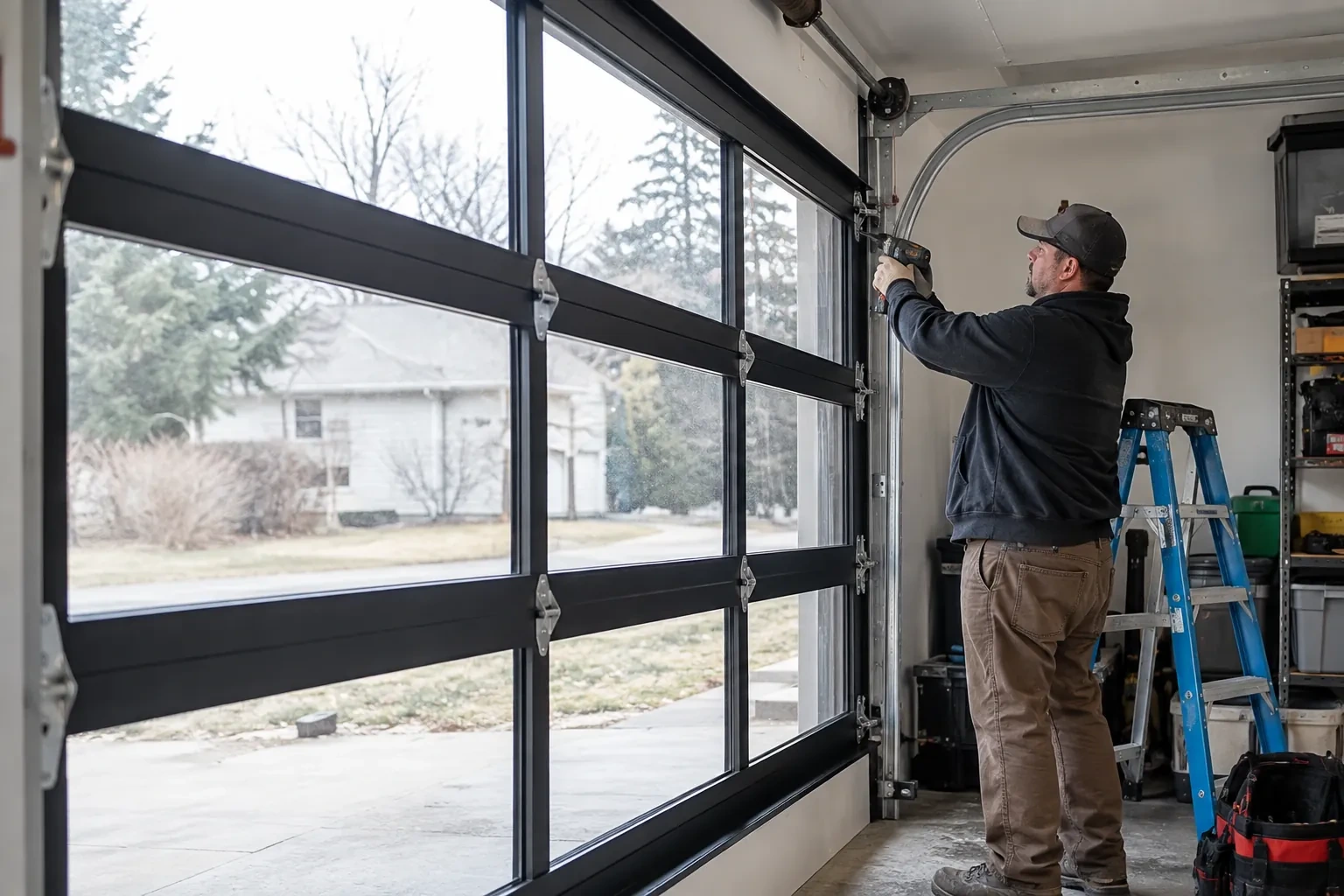
How the visit goesSomeone pulled the cord last spring to get a car out during an outage, and the door has never properly rejoined the opener. Press the button and the trolley glides along the rail by itself while the door stays exactly where it is.
Mississauga
How the visit goes
Who needs to use it, and how they get in
Finally the technician asks about the household and the building. Is there a side door or a door into the house, or is the overhead door the only way in? Who is likely to be pulling the handle in an outage: a tall adult, a teenager, an older relative? Does the family use the release often, or has it never been touched? Has a car roof been catching the cord? These answers shape the cord length, whether an outside key release is worth fitting, and how much of the visit goes to demonstration. The point is a release that works for the people who actually live there.
Reconnecting and proving the latch
Reconnection is done the way the maker describes for that unit. On most rails the cord is pulled toward the opener so the lever drops back to horizontal, then the opener is run and the trolley picks up the carriage with an audible click on the next cycle; on others the trolley re-latches when the door is lifted until it meets the carriage. The technician watches the join through a full open and close, then pulls the release and reconnects again to be sure the sequence repeats. You are shown what the click sounds like and what a trolley that has only half-latched looks like, so you can tell the two apart.
The sequence, demonstrated on your own door
Before leaving, the technician walks through the release with you rather than describing it. Door closed. Pull the handle straight down until the lever clicks over. Lift the door by its handle or a gripping point on the panel face, never at the joint between sections. Lower it the same way. To reconnect, pull the cord toward the opener, or simply run the opener, and listen for the trolley to click onto the carriage. Anyone in the house who might face a blackout with the car inside is welcome to try it while the technician is there.
Emergency Release Repair
In the van
- Trolley and carriage assembly
- Garage door lubricant
- Release cable and clips
- Hole saw for the top section
- Rope and red handle kit
What affects the quote
Same fees day, night or weekend
1Door material for the outside release
Cutting a cylinder hole through a thin steel section is routine; an insulated door, a wood door or a glass-panel top section takes more care and sometimes a reinforcing plate.
2Damage from a door that dropped
A release pulled on an unbalanced open door can bend the arm, the carriage, a bracket or a panel. Anything that took the impact is listed on its own once it has been seen.
3Freeing versus replacing the trolley
A trolley jammed on the stop bolt is freed, adjusted and reused when its latch is sound. One with worn teeth or a cracked body is replaced, which changes both parts and labour.
Emergency Release Repair: questions
What happens if someone pulled the release while the door was open?
Sometimes nothing, if the door is well balanced and stayed where it was. If the door came down on its own, the technician checks what took the impact: the door arm, the carriage, the bottom brackets, the rollers and the panel around the arm bracket. A bent arm or carriage is replaced, and the balance test shows whether the springs contributed. Then the release is reconnected with the door closed and the household is shown the right sequence.
The outside release lock froze. How do I stop that happening again?
Salt spray and meltwater get into the keyway during a thaw and freeze overnight, the same way they do in a house lock. Keep the cylinder face clear of slush, give it a puff of dry lock lubricant before the cold sets in, and carry a small de-icer through the winter. A weather cap over the cylinder helps on a door that faces the road. The technician cleans and treats the cylinder as part of any outside release repair.
Does every type of opener have a release?
Yes, in different forms. Chain and belt units have the familiar red handle on a cord from the trolley. Screw-drive units release at the carriage on the rail. Wall-mounted openers beside the door use a handle on a cable that is pulled down until it clicks, since there is no rail overhead. The parts differ, so the technician identifies the model before choosing a cord, lever, trolley or cable, and shows you the sequence for your own unit.
Openers & Access
Emergency Release Repair near you
Businesses in Mississauga need doors that keep moving; homeowners need doors that are safe and quiet. We serve both. Commercial services include rolling and sectional door repair and operator replacement; residential services run from spring and roller work to openers, seals and new insulated doors.